Creatine Myths, Fact-Checked: The Persistent Rumors vs the Research
Creatine is the most-studied supplement in sports science and somehow still the most-rumored: the bloat, the hair loss, the kidneys, the ‘basically a steroid’. The fact-check: each myth against the actual literature, verdicts included. (Info, not medical advice.)


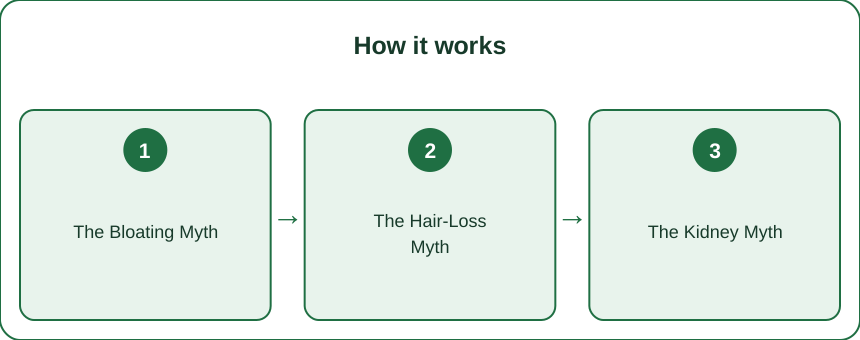
The Bloating Myth
The claim vs the data: ‘creatine makes you puffy’ — the reality is intracellular water (creatine pulls water INTO muscle cells — the fullness reads as toned, not swollen; subcutaneous bloat isn’t the mechanism), the scale honesty (a 0.5-1.5kg early increase is real, expected and fuel — the number is water in the tank, not fat on the frame; the scale-watchers deserve the warning so the blip doesn’t trigger a quit), the loading-phase connection (the old loading protocols concentrated the water shift into one dramatic week — the modern 3-5g daily approach spreads it invisibly), and the verdict: the ‘bloat’ is the mechanism working, misread.
The Hair-Loss Myth
The rumor’s whole origin: one 2009 study of rugby players found increased DHT (a hormone associated with pattern hair loss) — no hair was measured, the study was never replicated, and the subsequent research reviews find no creatine-hair-loss evidence (the entire myth rests on a single unreplicated hormonal blip that the field has since examined and shrugged at), the verdict: unsupported by current evidence — and notably, the women’s-creatine research boom has produced no hair signal either. The rumor outlived its source by fifteen years; that’s marketing physics, not biology.

The Kidney Myth
The persistent one: the confusion origin (creatine supplementation raises creatinine — a marker doctors use to ESTIMATE kidney function; the marker moves without the kidney changing, which spooked early interpreters and still confuses lab results today — tell your doctor you supplement before bloodwork), the actual evidence (decades of studies in healthy people show no kidney harm at standard doses — the research consensus is unusually firm), and the real caveat (pre-existing kidney conditions are the ask-first population — the myth’s grain of truth is that creatine wasn’t studied for THEM; the healthy-population verdict doesn’t transfer automatically). Verdict: safe for healthy kidneys, flagged for compromised ones — and warn your bloodwork.
The Steroid Myth and the Rest
The category confusion: creatine is a food-derived compound (present in meat and fish, made by your own body — the steroid comparison fails at the first fact; it’s closer to a vitamin than a hormone), the ‘only for bodybuilders’ myth (the modern research spans cognition, healthy aging and women’s health — the audience was always everyone with muscles and a brain), the ‘cycle it’ myth (no evidence supports cycling — the benefit is the saturated state; continuous daily use is the studied protocol), and the ‘expensive versions are better’ myth (creatine monohydrate is THE studied form — the HCl and buffered premium tiers charge more for equivalent-at-best results; the plain tub wins). The most-studied supplement earned boring answers — the rumors just never read the studies.
Water in the muscle not under the skin, hair myth is one dead study, kidneys fine but tell your doctor, monohydrate wins. Creatine’s myths age worse than its evidence — check facts, save money, lift on.
Keep Reading
This article is for general informational purposes only and is not medical advice. Always consult a qualified health professional for guidance specific to you.