Do You Actually Need a Creatine Loading Phase? What the Research Says
Quick Answer: No, a creatine loading phase isn’t required — steady daily dosing (3-5g) reaches the same muscle saturation as loading, just over 3-4 weeks instead of 5-7 days. Loading only makes sense if you have a near-term deadline like a competition and don’t mind a higher chance of mild GI discomfort.
You start reading about creatine and immediately hit a wall of conflicting advice: one site says load 20g a day for a week, split into four doses, or you’re “wasting your money.” Another says just take 5g a day from day one and skip the whole thing. Both can’t be right — except, weirdly, they kind of are.

Why Do Loading Phase Recommendations Contradict Each Other?
The disagreement isn’t a sign that nobody actually knows how creatine works — it’s a sign that “loading” and “not loading” are solving two different problems, and different sources care about different ones.
Loading (typically 20g/day, split into 4 doses of 5g, for 5-7 days) genuinely does saturate your muscle creatine stores faster than a steady dose. That part isn’t marketing spin — it’s the real, measurable mechanism the loading protocol is built around. Skip loading and take a steady 3-5g a day instead, and you get to the same eventual saturation point — you just get there in 3-4 weeks instead of a week.

So the sources aimed at athletes prepping for a specific event lean hard on loading, because speed is the whole point for them. Sources writing for general long-term users — the “I just want more energy in the gym” crowd — often skip it entirely, because there’s no deadline to rush toward. Neither is wrong. They’re answering different questions.
One thing worth flagging plainly: some supplement marketing frames loading as necessary for creatine to “work” at all. That’s an overstatement. Loading changes your timeline, not your outcome.
Same Destination, Different Timeline
Think of it like flying versus driving to the same city. You arrive in the same place either way — loading is just the flight.
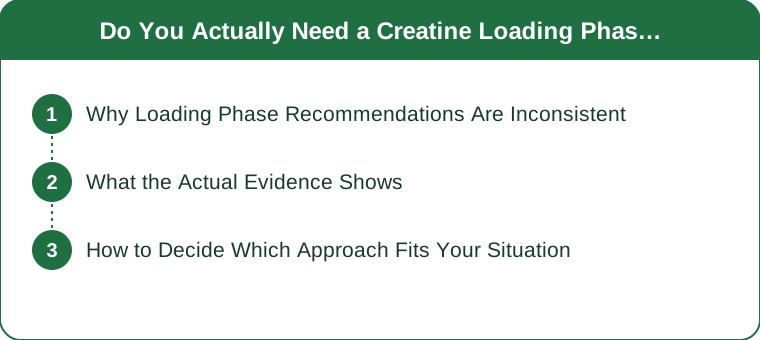
What Does the Actual Research Show?
Here’s the part most articles bury: loading and non-loading protocols reach comparable muscle creatine saturation once enough time passes. That’s the headline finding across most of the comparisons.
The numbers, roughly:
- Loading protocol: near-full saturation in about 5-7 days (20g/day, split into 4x5g doses)
- Steady dosing: the same saturation point in about 3-4 weeks (3-5g/day, no split needed)
Performance benefits track with when you hit saturation — so loading gets you the benefit sooner, not a bigger or different benefit. There’s no strong evidence that loading produces a better long-term outcome once both groups have saturated. Once you’re both at the same finish line, it doesn’t matter how you got there.
The one real cost of loading: GI discomfort is more common at the higher loading doses. Bloating, cramping, and loose stools show up more often when you’re taking 20g/day than when you’re taking 5g/day — which makes sense, it’s four times the dose hitting your gut at once. Individual tolerance varies a lot here and isn’t something research can predict for you in advance; it’s worth testing on your own body if you go this route.
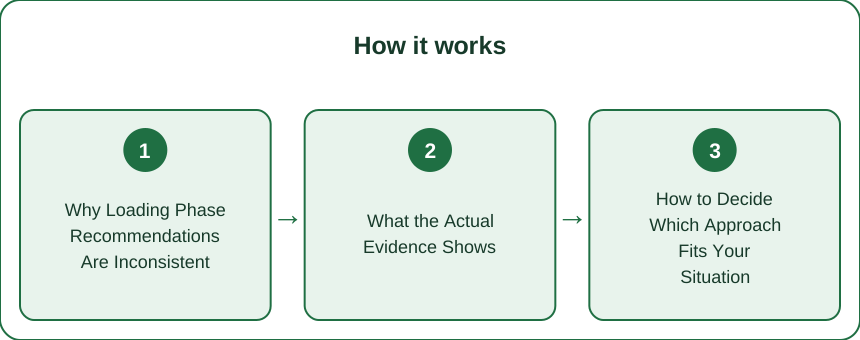
So How Do You Decide Which Approach Fits You?
Load if you have a real near-term deadline. A competition, a photo shoot, a specific event 1-2 weeks out — loading gets you to full saturation in about a week instead of a month, and that speed is the entire reason the protocol exists.
Skip loading if there’s no deadline. If you’re taking creatine for general long-term strength and recovery with no event on the calendar, there’s little reason to accept a higher chance of GI discomfort just to arrive 3 weeks earlier at a place you’ll reach either way.
Split the dose if you want some speed with less discomfort. Breaking a loading dose into 4 smaller portions across the day (which is already standard practice) reduces the GI hit while still accelerating saturation somewhat — a solid middle path if you’re impatient but cautious.
Stay consistent afterward, regardless of method. Once you’ve reached saturation — however you got there — daily consistency is what maintains the benefit. The loading phase is a one-time decision; the daily habit is the one that actually matters long-term.
Know your own gut before choosing the fast route. If you already know you’re prone to digestive sensitivity with supplements or dietary changes, default to steady dosing. There’s no trophy for loading if it means a week of stomach discomfort. As always, check with your doctor before starting creatine if you have kidney concerns or take medications.
Myth vs Fact: Creatine Loading
Myth: “Creatine doesn’t work unless you load it first.” Fact: Loading only changes when you reach saturation, not whether you do. Steady dosing gets you to the identical place — just three weeks later.
Myth: “Loading builds a bigger long-term reserve.” Fact: No. Once saturated, both groups plateau at the same level. There’s no “extra” you bank by loading.
Myth: “If you don’t load, you’re wasting the first month.” Fact: You’re not wasting it — you’re just building up gradually instead of front-loading it. The end result is the same; only the calendar differs.
Mini FAQ
Do I need to load creatine to see results?
No. Steady 3-5g daily dosing reaches the same muscle saturation as loading — it just takes 3-4 weeks instead of 5-7 days. Either way works.
What’s the actual loading phase protocol?
Typically 20g/day split into four 5g doses for 5-7 days, followed by a 3-5g daily maintenance dose. Splitting the doses reduces (but doesn’t eliminate) GI discomfort.
Is creatine loading safe?
For most healthy adults, yes — the main downside is a higher chance of mild digestive discomfort, not a safety risk. If you have kidney concerns or take medications, check with your doctor before starting either protocol, loading or not.
TL;DR:
- Loading and steady dosing reach the same eventual muscle saturation — loading is just faster (5-7 days vs. 3-4 weeks)
- No long-term outcome advantage to loading once both approaches saturate
- Loading carries a higher chance of mild GI discomfort at the higher doses
- Load only if you have a real near-term deadline; otherwise steady dosing is simpler and gentler on your gut
- Daily consistency after saturation matters more than which method got you there
Keep Reading
This article is for general informational purposes only and is not medical advice. Always consult a qualified health professional for guidance specific to you.