Does Creatine Actually Damage Your Kidneys? What the Research Really Shows
Quick Answer: In people with healthy kidney function, multiple long-term studies (some tracking usage for years) have found no evidence that standard creatine supplementation damages the kidneys — the myth largely stems from creatine naturally raising creatinine levels (a common kidney function marker) which can look like reduced kidney function on a blood test without actually reflecting real kidney damage.
The confusion is a genuine lab-result quirk, not evidence of an actual safety problem, for people without pre-existing kidney conditions.

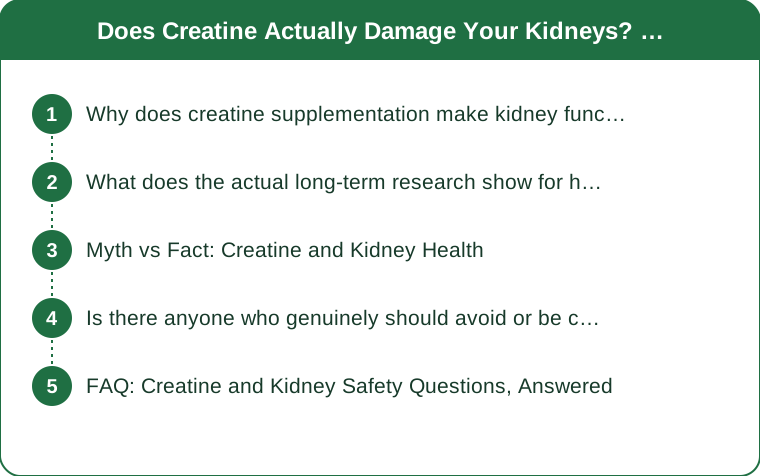
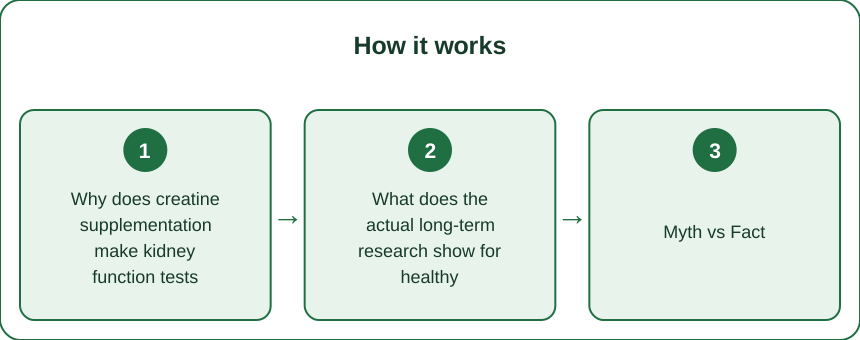
Why does creatine supplementation make kidney function tests look different?
Creatine supplementation increases blood creatinine levels as a normal metabolic byproduct, and creatinine is the standard marker doctors use to estimate kidney filtration function — so a higher creatinine reading can look like reduced kidney function on a standard test, even though actual filtration ability (measured through more precise methods like cystatin C or actual GFR testing) remains unchanged.
This is a well-documented lab interpretation issue, not a sign of genuine kidney stress, which is the key nuance that gets lost in the broader ‘creatine hurts your kidneys’ claim.
What does the actual long-term research show for healthy individuals?
Multiple studies tracking creatine users for periods ranging from several months to multiple years have found no measurable decline in actual kidney function (via more precise filtration measures) in people with healthy kidneys at standard supplementation doses, including in athletic populations using it consistently over extended periods.
This research consensus is why most sports medicine and nutrition professional bodies consider creatine one of the more thoroughly studied and safety-supported supplements available, specifically for people without pre-existing kidney conditions.

Myth vs Fact: Creatine and Kidney Health
Myth: Elevated creatinine from creatine use means kidney damage is occurring. Fact: Elevated creatinine from supplementation is a known lab artifact, not evidence of reduced actual kidney filtration function in healthy individuals.
Myth: Long-term creatine use is unstudied and risky. Fact: Creatine is among the most extensively studied supplements, with data spanning years of consistent use in various populations.
Myth: Everyone should avoid creatine as a precaution regardless of kidney health. Fact: The safety data specifically applies to people with healthy kidney function — the caveat is about pre-existing conditions, not blanket avoidance.
Is there anyone who genuinely should avoid or be cautious with creatine due to kidney concerns?
People with pre-existing kidney disease or significantly impaired kidney function should consult a doctor before starting creatine, since the research supporting its safety specifically applies to populations with healthy kidney function at the outset, not to those with an existing condition.
For everyone else, standard doses (3-5g daily) used in the vast majority of research have not shown evidence of kidney harm, but that safety data doesn’t automatically extend to populations with pre-existing kidney impairment.
FAQ: Creatine and Kidney Safety Questions, Answered
Should I get my kidney function tested before starting creatine if I have no known issues?
It’s not typically necessary for healthy individuals, though anyone with a family history of kidney disease or existing health concerns should discuss it with a doctor first.
Does higher-than-standard dosing increase kidney risk?
Most safety research is based on standard doses (3-5g/day); significantly higher doses haven’t been studied as extensively, so sticking to standard dosing is the more evidence-supported approach.
Will my doctor be confused by elevated creatinine if they don’t know I take creatine?
It’s worth mentioning creatine supplementation to your doctor before any kidney function bloodwork, since they may otherwise misinterpret elevated creatinine as reduced kidney function.
TL;DR:
- Creatine raises blood creatinine as a normal side effect, which can look like reduced kidney function on standard tests without actually being one
- Long-term studies using more precise kidney function measures show no damage in healthy individuals at standard doses
- The caution genuinely applies to those with pre-existing kidney disease, not to the general healthy population
- Mentioning creatine use to your doctor before bloodwork avoids a lab-result misinterpretation
The myth has a real, understandable origin — it’s just describing a lab quirk rather than an actual safety issue for healthy kidneys. This is general information, not medical advice.
Keep Reading
This article is for general informational purposes only and is not medical advice. Always consult a qualified health professional for guidance specific to you.