Creatine and the Brain: The Cognitive Case Beyond the Gym
Creatine built its reputation in muscles — but the brain runs on the same energy currency, and the cognitive research keeps producing intriguing results: sharper working memory under sleep deprivation, notable effects in vegetarians, active trials everywhere. The brain case, honestly sized. (Info, not medical advice.)

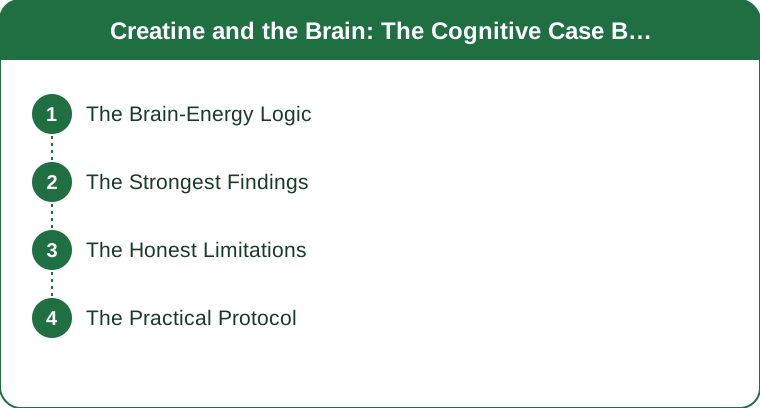
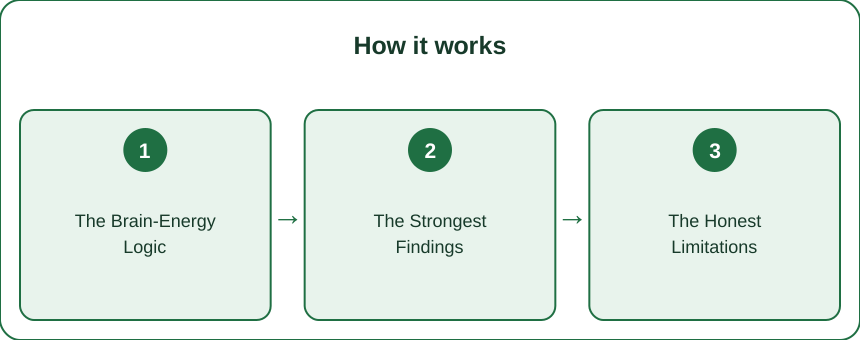
The Brain-Energy Logic
Why the brain cares: the brain is an energy hog (roughly 20% of the body’s energy budget on 2% of its mass — and it uses the same creatine-phosphate rapid-energy system muscles do), the supplementation question (brain creatine stores respond to supplementation more modestly than muscle — the blood-brain barrier is a tougher door; higher or longer dosing may matter, an active research question), and the demand hypothesis (the cognitive benefits appear largest when the brain is STRESSED — sleep deprivation, hard cognitive load, low baseline stores; creatine looks less like a smart-drug and more like a reserve tank that matters when the main tank runs low).
The Strongest Findings
Where the evidence stands out: the sleep-deprivation studies (creatine supplementation preserved working memory and processing speed under sleep loss in multiple trials — the shift-worker, new-parent and exam-season populations are exactly who this describes; one recent trial even showed acute high-dose effects during a sleepless night), the vegetarian-and-vegan findings (dietary creatine comes from meat — plant-based eaters run lower baseline stores and show the LARGEST cognitive responses to supplementation in the research; the clearest ‘who benefits’ answer in the whole field), and the aging-brain interest (trials in older adults on memory measures show promising-if-mixed results — the healthy-aging stack conversation increasingly includes it).

The Honest Limitations
The calibration: effect sizes are modest (creatine sharpens the stressed brain somewhat — it doesn’t transform the rested one; the well-slept, meat-eating, healthy adult may notice little), the research is young-but-growing (meta-analyses lean positive on memory measures with plenty of heterogeneity — the field is active, not settled), and the mechanism-vs-marketing line (the supplement industry is already overselling this chapter — ‘brain fuel’ claims outrun the trials; the honest pitch is ‘plausible reserve support, strongest evidence under stress and low baselines’).
The Practical Protocol
The brain-angle application: the same boring protocol (3-5g monohydrate daily — the brain case doesn’t change the dose; consistency saturates both tissues), the who-should-care shortlist (vegetarians and vegans — the clearest case; the chronically under-slept seasons — new parents, shift workers, exam weeks; and the already-lifting crowd, who get the brain angle free with the muscle one), the who-can-skip (the well-rested omnivore chasing a cognitive edge will find better returns in the sleep-and-exercise chapters — creatine is not the bottleneck), and the stacking sanity (creatine joins the boring-effective tier with morning light and protein — the unglamorous stack that actually compounds). The gym supplement turned out to be a body-wide energy story — brain included, modestly and honestly.
Same energy system upstairs, strongest when sleep-deprived or plant-based, modest and real, same 3-5 grams. Creatine’s brain chapter is promising and honest — a reserve tank, not a smart drug.
Keep Reading
This article is for general informational purposes only and is not medical advice. Always consult a qualified health professional for guidance specific to you.