Why Does Creatine Cause Bloating, and Does It Ever Go Away?
Quick Answer: Creatine bloating is caused by increased water retention inside muscle cells (not the digestive system), and for most people it’s a temporary effect that reduces significantly within a few weeks as the body adjusts, especially with a moderate daily dose rather than a high-dose loading phase.
You started creatine and noticed a puffier, heavier feeling and you’re wondering if that’s normal or a sign to stop. It’s a well-documented, understood effect — and knowing the mechanism helps you manage it rather than abandon a supplement with strong research support.

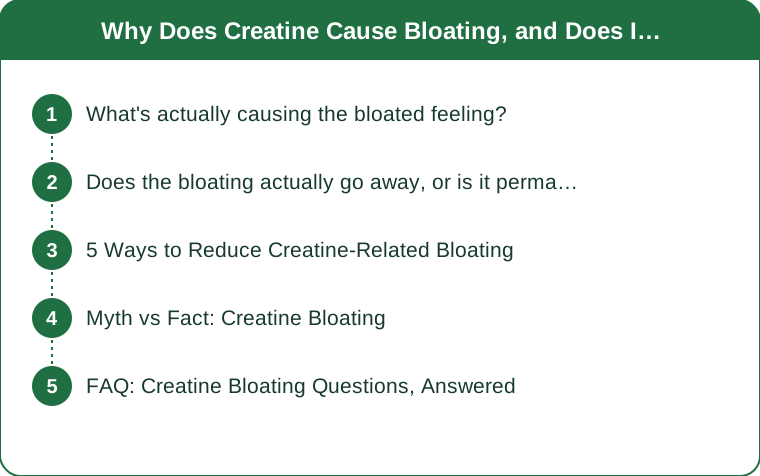
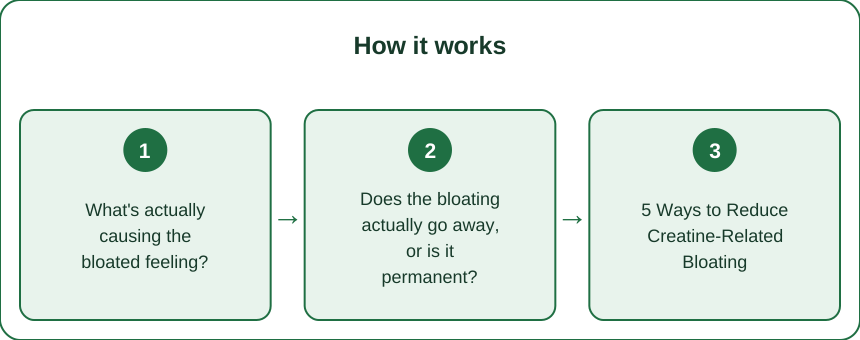
What’s actually causing the bloated feeling?
Creatine draws water into muscle cells (intracellular water retention) as part of how it works — this is a different mechanism than digestive bloating from food, even though it can produce a similarly puffy, heavier sensation, especially in the first couple of weeks.
This water retention is actually part of creatine’s function, not a side effect separate from its benefit — it’s linked to the cell volumization that contributes to creatine’s muscle-related effects.
Does the bloating actually go away, or is it permanent?
For most people, the most noticeable bloating occurs in the first 1-2 weeks, particularly with a high-dose loading phase (20g/day), and settles significantly once the body adjusts to a standard maintenance dose (3-5g/day).
Some degree of water retention within muscle cells persists as long as you’re supplementing, but it typically becomes far less noticeable subjectively after the initial adjustment period, even though the underlying mechanism doesn’t fully disappear.

5 Ways to Reduce Creatine-Related Bloating
1. Skip the loading phase. Starting directly at 3-5g/day instead of a 20g/day loading phase produces the same eventual saturation with less initial water retention, just over a slightly longer timeline (about 3-4 weeks instead of about a week).
2. Stay well hydrated. Counterintuitively, adequate water intake supports better fluid balance rather than worsening retention.
3. Take it consistently at the same time daily, rather than inconsistent dosing that can cause more noticeable fluctuation.
4. Choose creatine monohydrate over some blended products with added ingredients that can independently cause digestive bloating, muddying which ingredient is actually responsible.
5. Give it the full adjustment window (2-4 weeks) before deciding the bloating won’t improve — many people stop too early, right before it typically levels off.
Myth vs Fact: Creatine Bloating
Myth: Creatine bloating means you’re retaining unhealthy or excess water throughout your whole body. Fact: The water retention is specifically intracellular (inside muscle cells), which is functionally different from the fluid retention associated with, say, excess sodium intake.
Myth: If creatine bloats you, it’s not working for you specifically. Fact: Bloating and effectiveness aren’t linked — some people experience noticeable water retention with strong creatine benefits, others experience minimal bloating with equally strong benefits; individual response varies.
Myth: You have to stop creatine if you notice any bloating. Fact: For most people it’s a manageable, temporary adjustment phase, not a sign to discontinue — though persistent discomfort is worth discussing with a doctor if it doesn’t improve.
FAQ: Creatine Bloating Questions, Answered
Should I stop creatine if bloating doesn’t improve after a month?
If it’s persistent and uncomfortable beyond the typical adjustment window, it’s reasonable to reassess with a doctor — but most people see meaningful improvement by that point.
Does a lower creatine dose still work if I’m trying to minimize bloating?
Yes — the standard 3-5g/day maintenance dose is well-supported in research without needing a loading phase at all.
Is creatine bloating the same as gaining fat?
No — it’s water retention within muscle cells, distinct from fat gain, though the scale number and a puffier appearance can be easy to misattribute without understanding the mechanism. This is general information, not medical advice.
TL;DR:
- Creatine bloating comes from water retention inside muscle cells, not digestive bloating
- It’s typically most noticeable in the first 1-2 weeks, especially with a loading phase
- Skipping the loading phase and staying hydrated both help reduce the initial effect
- Bloating and creatine’s effectiveness aren’t linked — it varies by individual, not by results
This is general information, not medical advice — give it the full adjustment window before deciding it’s not for you.
Keep Reading
This article is for general informational purposes only and is not medical advice. Always consult a qualified health professional for guidance specific to you.